Welcome


From time to time I write here about my photographic activities. If you would like to receive an e-mail if there is a new record, you can register or log off here.

Sunday, March 30, 2014

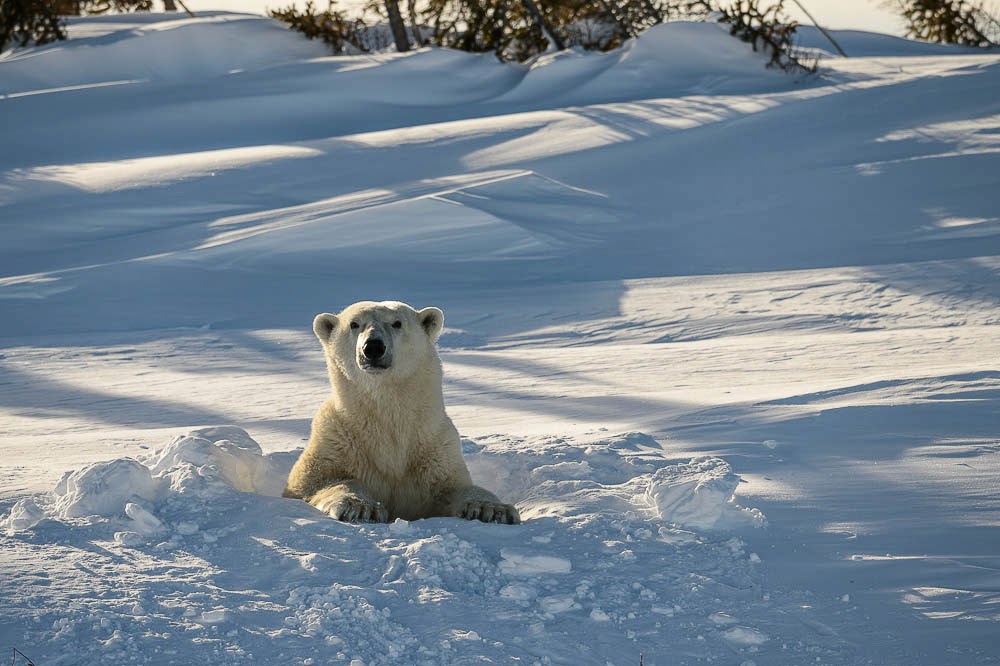
Polar bear mother with cub in Wapusk NP

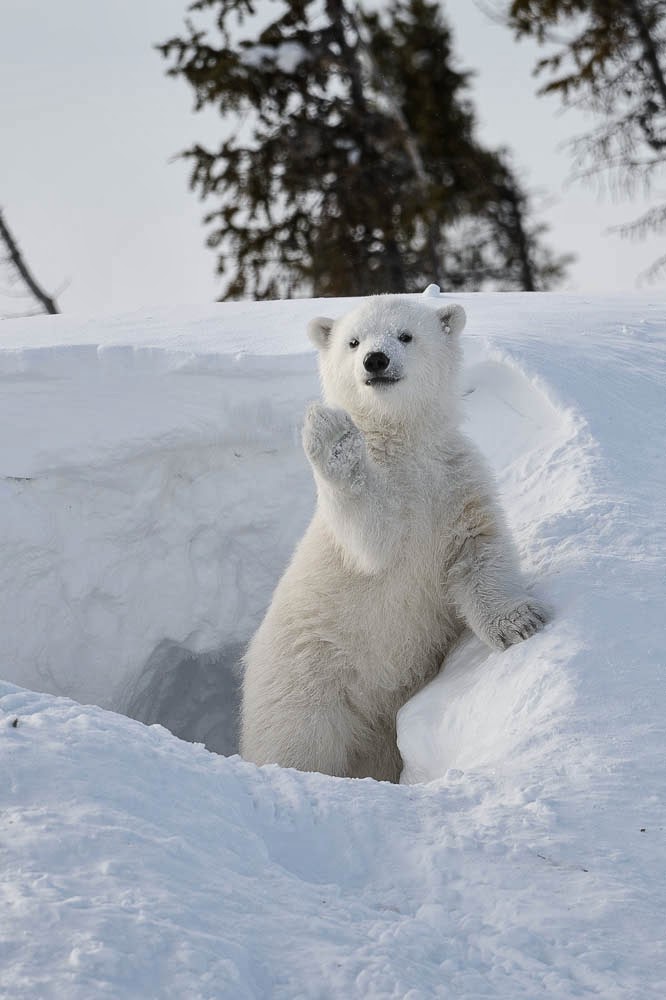
The fascination of polar bears has brought me back to the Wat'chee lodge near Wapusk National Park, about 60 kilometers south of Churchill at the Hudson Bay in Canada. There, where icy winds create temperatures down to minus 50° Celsius polar bear mothers dig themselve winter dens to give birth to their cubs. In March, when the little polar bears are 3 months old, they come out of the caves to make the long journey to the sea, as they are desperate to feed after the long fast.
Like in 2012 it was difficult to photograph them. During nine days I could only see one mother with a single cub. She was extremely shy and showed up only for a total of maybe 15 minutes! But the light was spectacular and dramatic. The cub however was very cooperative and came out of the den quite often. Despite a tedious trip (three days with a blizzard to get there... and two days
with a blizzard to get back  ...) it was worth it. A unique and emotional experience.

Surprised, that people are waiting, the mother comes out of the den after 6 months and shakes the snow from her fur. The evening backlight makes for a spectacular effect.
http://www.rudolf-hug.ch/content/fotogalerie/Animals/Mammals/Bears%20%28Polar%29/slides/_14G0081.html

Soon follows the cub and sees daylight for the first time in his life. An emotional moment that touched me deeply. Not very often people can witness and photograph this very moment.


Before making the way to the sea, the mother digs, to our surprise, at a distance of about a kilometer a new snow den. There they remain for almost a week before she sets out on an early morning. She rarely shows up while we are there. The cub however plays outside quite often - much to our delight. With my new Nikon 800mm lens I am able to capture images with almost incredible sharpness.


The vastness of the Wapusk National Park, only interrupted by small groups of trees along the many frozen lakes, the cold, the rough nature fascinate me again and again. The sunsets are spectacular and the icy winds sometimes brutal. "Our wilderness will touch you" is the slogan of the friendly people at the Wat'chee lodge.

 
More images can be seen here:

Sunday, February 16, 2014

People & Nature in Southwest China

It still exists - the old China - but you have to get away from the centers, the big cities. Out into the country. The Southwest of China not only offers unique landscapes. It is also home of various minorities. China is incredibly diverse. On my trip last October I have seen a small part of it. Aside from the beaten track. With local guides, who know the country and people who enabled me to get in touch with the people.

Guilin und Yangshuo
Guilin is famous for its unique karst mountains. Numerous hills rise conical or narrow as columns of the flat surface and form a unique panorama. Daxu, a small village on the Lijiang River is located about 20km southeast of Guilin and has largely remained authentic. In Yangshuo I'm doing a bamboo raft trip on the Yulong River, a quiet tributary of the Li River through the fantastic karst landscape.

http://www.rudolf-hug.ch/content/fotogalerie/Travel/China%202013/index.html


Rice terraces of Longsheng 
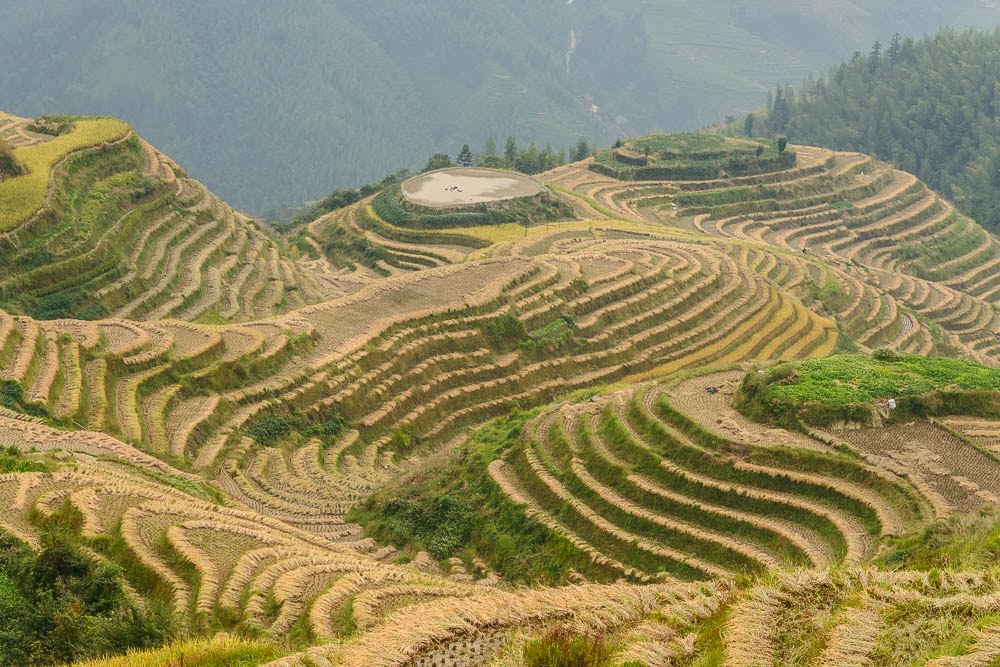
The next stop is Longsheng Longji-terrace with rice-fields that form a magnificent attraction, glowing in different shades of green. I spend the night the middle of the rice terraces in the Lian-Lodge, a fantastically beautiful hotel. Longsheng is also home to the Dong, a small minority. The women of the Dong cut their hair only once in life when they get married. Open the hair reach to the bottom. Pinned up, they are the pride of this minority.

http://www.rudolf-hug.ch/content/fotogalerie/Travel/China%202013/index.html


Wind and Rain Bridges of Sanjiang
The village Ba'ao is home to the Dong minority. They are known for the unique architecture of its wind and rain bridges, where always 5 pavilions are connected by corridors. As almost everywhere in China gambling isof great importance. In each village you can see men gambling.

http://www.rudolf-hug.ch/content/fotogalerie/Travel/China%202013/index.html


Red Earth in Xing Tian
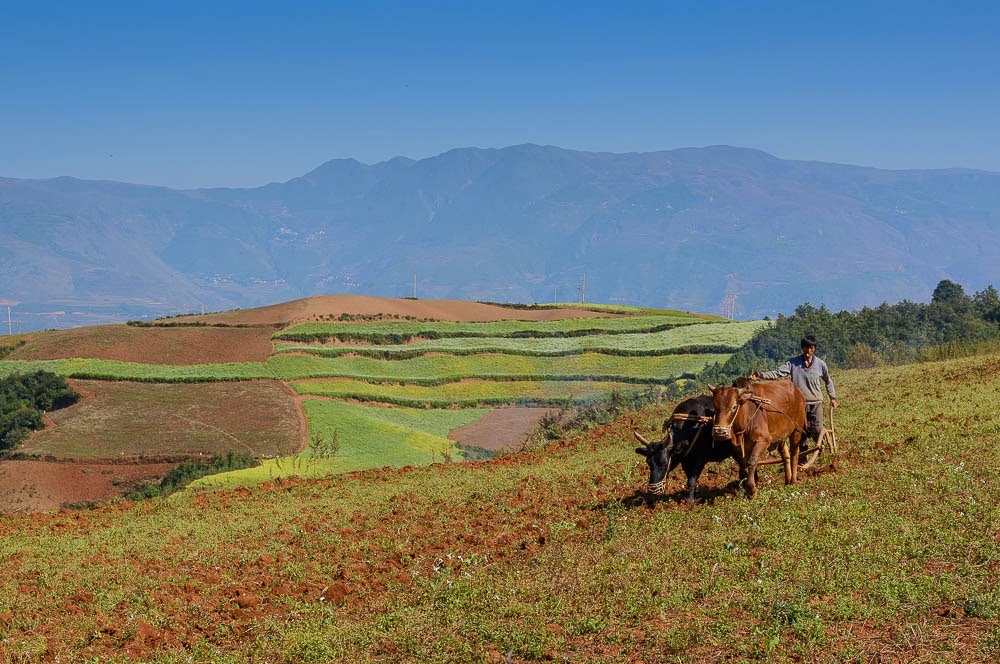
After a flight to Kunming I drive about 160 km north-east to the town Donchuan. From there I continue to "Hong tu di", which means "red earth". An area which is by tourist standards largely undeveloped and very simple. The time seems to have stopped long time ago. The beautifully arranged fields are cultivated with wooden plow and oxen or horses. The Guide has just a hand-drawn map and has to ask for the way. Also the accommodation and the food is very simple! 
 
http://www.rudolf-hug.ch/content/fotogalerie/Travel/China%202013/index.html


Lijiang
After an exciting time it goes back to Kunming and from there by plane to Lijiang. The UNESCO World Heritage city is an attraction to hundreds of thousands of Chinese tourists. After the initial shock, the local guide "abducted" me, into the "backyards" of the city, where life is still unspoilt. The minority "Naxi" are seen in their traditional dresses and elderly women meet at the market place for morning exercises.

http://www.rudolf-hug.ch/content/fotogalerie/Travel/China%202013/index.html
 
 
Liming
About three-hour drive from Lijiang lies Liming. In the near Laojunshan National Park lies the "Thousand turtles mountain", an unparalleled rock formation that is similar to the armor of thousands of turtles. Over a thousand steps lead to the terrific formation.
 
http://www.rudolf-hug.ch/content/fotogalerie/Travel/China%202013/index.html
 

Tiger Leaping Gorge
Next target is the headwaters of the Yangtze River, the Jinsha River. The river cut over millions of years a deep channel into the mountains. The river rushes at its narrowest point with a loud roar through the Tiger Leaping Gorge. The "Tea Horse Trade House", my accommodation for the night, is accessible only trough a dramatically steep gravel road.
http://www.rudolf-hug.ch/content/fotogalerie/Travel/China%202013/index.html


Lugu Lake
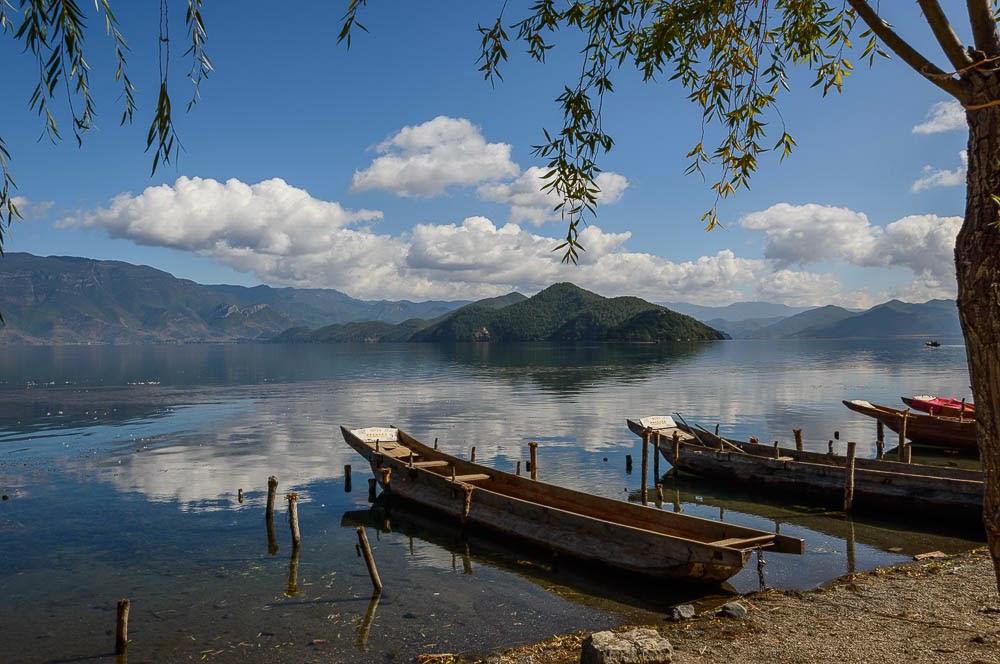
At 2685 m above sea level is the Lugu Lake, one of the largest mountain lakes in Asia. The lake is "beside me" the destination of hundreds of thousands of tourists from China. As a "long nose" I am the main attraction, because no tourists from other countries are there. Slightly off the beaten track, the minorities of Mosuou and Yi are found. Exciting encounters in a beautiful landscape.

http://www.rudolf-hug.ch/content/fotogalerie/Travel/China%202013/index.html


Kunming
The tour is concluded with a visit to the Stone Forest, south of the big city of Kunming. Hollywood was probably a model of this tourist attraction. And even in a large, modern hotel it is almost impossible to communicate in EnglishAfter the excursion into the "old China" this visit takes me back to reality.

http://www.rudolf-hug.ch/content/fotogalerie/Travel/China%202013/index.html


An exciting journey that passes much too quickly. The contrasts between modern cities and the pristine China are exciting but probably not much longer to be seen. The country develops dramatically fast!

More pictures of this trip can be seen in the gallery on my website.

Sunday, August 25, 2013

The magic of the Far North

It is the Light of the North, which always fascinated me. The sun never sets in the summer, the shallow angle of incidence, the clouds, the lush green of the moss, the deep blue of the ice and the pastel colors of the sky! The barren, vast expanses of landscape, the cold, the crackling ice and of course the animals.
We (ie twelve photographers plus guides) are traveling with an expedition icebreaker from the 50s. A small ship without stabilizers and simple cabins - but with lots of charm and agility. We start from Lonyearbyen in Svalbard and sail to the north.


We find the king of the Arctic Ocean, the polar bear, only very close to the 82 Latitude. This is only about 550 miles from the North Pole. So far north is the ice edge. And the ice is pretty open, which means that the bears must swim from ice sheet to ice sheet. The encounters with the polar bears are, as always, unique, and after the many sightings on the mainland it is exciting to photograph them now on the ice and in the sea.


The Arctic is not the Serengeti, the variety is much smaller and it is difficult to find the animals in the immensity. The guides do a great job and scan with binoculars from the bridge or get even up to the crow's nest for wildlife. Usually we can photograph from the low deck. With the help of two zodiacs we also able to approach the animals and take pictures from a lower angle.


A special experience is the encounter with the whales, the largest mammals in the world. To see and hear a blue whale or a group of fin whales in the immediate vicinity of the ship is an emotional, indescribable experience. But to be able to watch about ten humpback whales for more than half an hour at their games and jumps, even the heart of "spoiled nature photographers" laugh.


At various landings on the islands of Svalbard we can take pictures of the sparse flora and fauna. And the question arises, what is now nicer to photograph: a lonely, single flower or the riot of color of a flower field. It is both beautiful - where the individual flower probably receives more attention than a sunflower in the big field. As usual in life ..


A fantastic journey that goes much too quickly. The rich colors, the diversity of Switzerland has me back. And I think of the pastel shades - the magic of the Far North.

More images of this journey can be seen on my homepage.