Welcome


From time to time I write here about my photographic activities. If you would like to receive an e-mail if there is a new record, you can register or log off here.

Friday, April 3, 2015

The last hunter-gatherers, living in the wilds of Tanzania

A trip to the Hadza, the last hunter-gatherers in Africa

Near the "cradle of mankind", in the Great Rift Valley of Africa, about 700 people still live as "hunter-gatherers" such as 10,000 years ago. In the dry savannah, northeast of Lake Eyasi in Tanzania, the Hadza eke out their meager existence. The men as hunters with bows and arrows and women as gatherers of berries, honey, fruit of the baobab tree and tubers.
On a recent trip to Tanzania I have
visited a group of Hadza and accompanied them on the hunt in the early morning.

When I arrive at their place, some men and women already sit around the warm glow of the fire while most of the members of the tribe are still sleeping. Gradually, they come out of their simple huts made of agave, covered with leaves, and join the warming fire. They talk in a peculiar click language and most likely discuss who goes hunting.


But they are still busy with the crafting of arrows. The slightly crooked posts are peeled, heated in the fire and then straightened between the teeth. Critically they check the arrows again and again until they are straight. The hunters use three types of arrows: a simple wooden arrow for hunting small animals, one with an iron head for larger and poison-arrows for the very large animals.


Suddenly three hunters jump up and disappear in the thicket of the bush. I follow them with my guide on their two-hour hunt through thickets, thorn bushes and tall as a man Agave with pointed leaves. They are quick and agile - we must work hard, not to lose sight of them.


With incredible precision they shoot their arrows at the animals they find in trees or bushes. Most are small birds or rodents. With fortune also baboons, antelopes and zebras or maybe even giraffes. In between one of the hunters climbs a huge baobab tree to enter the open-top trunk to a water supply from the last rain. With a drinking vessels, made from a hollowed-out fruit of the tree, they quench their thirst.


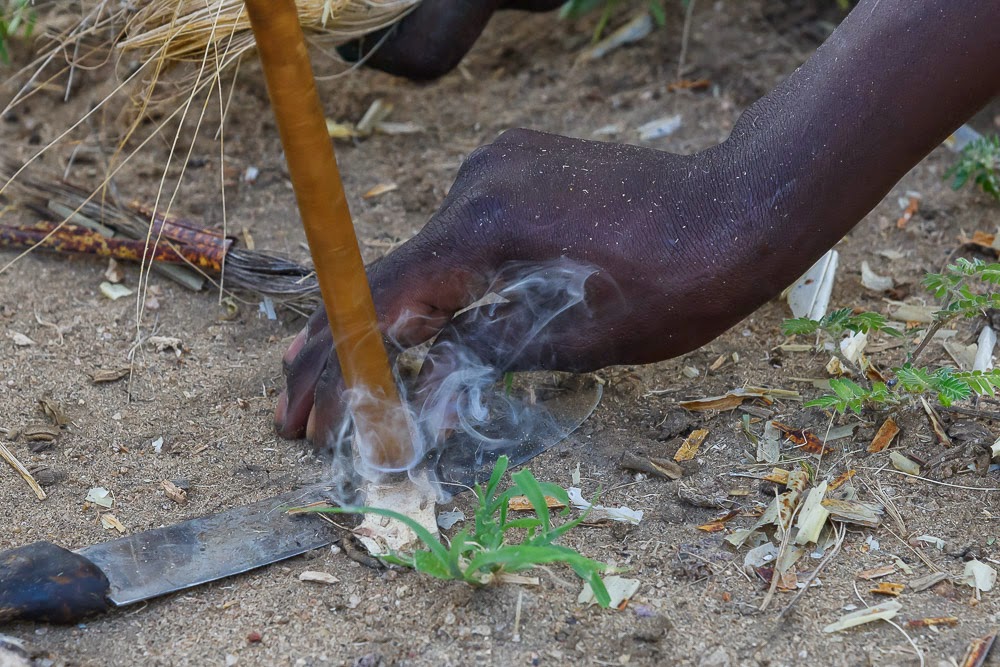
They are not very lucky and did not hunt enough to share it with those who remained behind. So they decide to eat the captured birds on the spot. Within a short time they start a fire by rotating a hardwood rod between hands on a rotten piece of wood. After a few minutes the fire burns, on which the coarse plucked birds are roasted. Of course, I am offered a part of the booty, and I am not unhappy that they hunted birds and not a monkey.


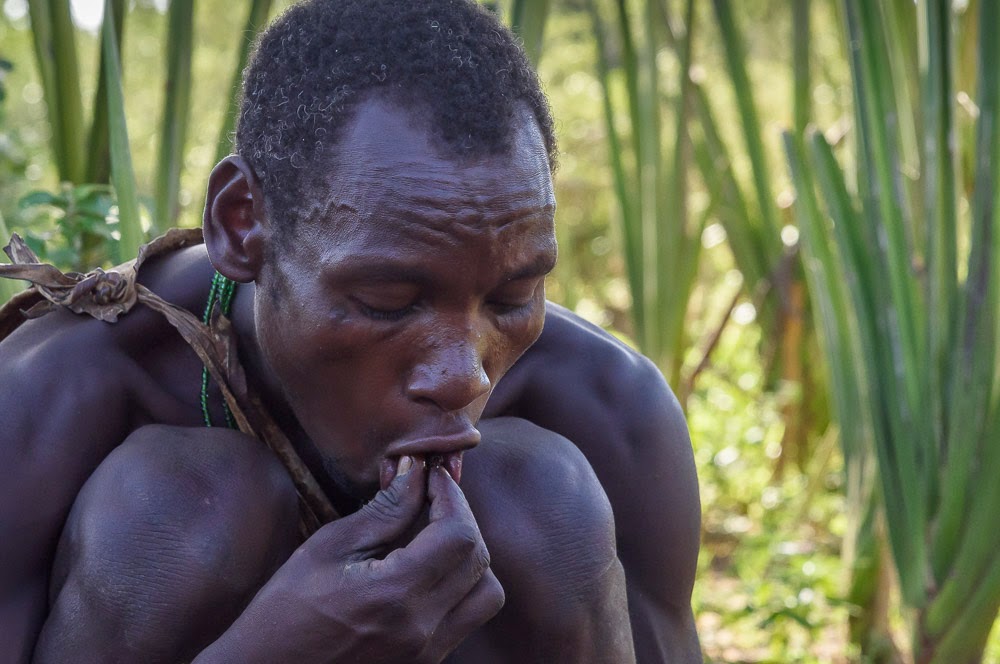

It's amazing how this small group of people could withdraw the influences of civilization for so long . The only visible influences are pants and partly T-shirts for men and colored fabrics for women. On the hunt many still wear skins of captured baboons. Jewelry, knives, arrowheads made of iron are traded with the neighbouring tribes.


An exciting glimpse into a world that eventually does not last much longer. In Africa, the land is also scarce and tribes living from agriculture, dispute with the hunter-gatherers about their territory. The Hadzabe, who always lived peacefully, have a hard time to defend themselfes. There are efforts of the Government to allocate the Hadza certain areas. I hope it succeeds and is then respected.

More images:
Tanzania Tribes

In the course of the trip I was in the Serengeti. These pictures will follow soon.

Sunday, November 9, 2014

Wild Africa - Masai Mara and Amboseli NP

Masai Mara

After many years "wildlife photography in the north" I decided to explore the world of animals in more southerly climes. A completely different world - luxurious, both in the colours as well as the occurrence - but much more challenging light conditions! In thin clothing instead of thick down jackets - ten animals in a day instead of one animal in ten days.
The first part of the trip I spent in a small tented camp in the Masai Mara. Together with guides, which are the best wildlife photographers in Africa. (Organised by C4 Images - highly recommended - 
http://www.c4images-safaris.co.za) A simple camp but the warmth of the staff and the food leave nothing to be desired.

Already on the first day I was lucky to see a mother cheetah with five cubs. Only for a brief moment she pauses on a termite hill. Not posing for us, but to have a lookout for prey.

http://www.rudolf-hug.ch/content/fotogalerie/Travel/Africa%202014/index.html

The Serengeti
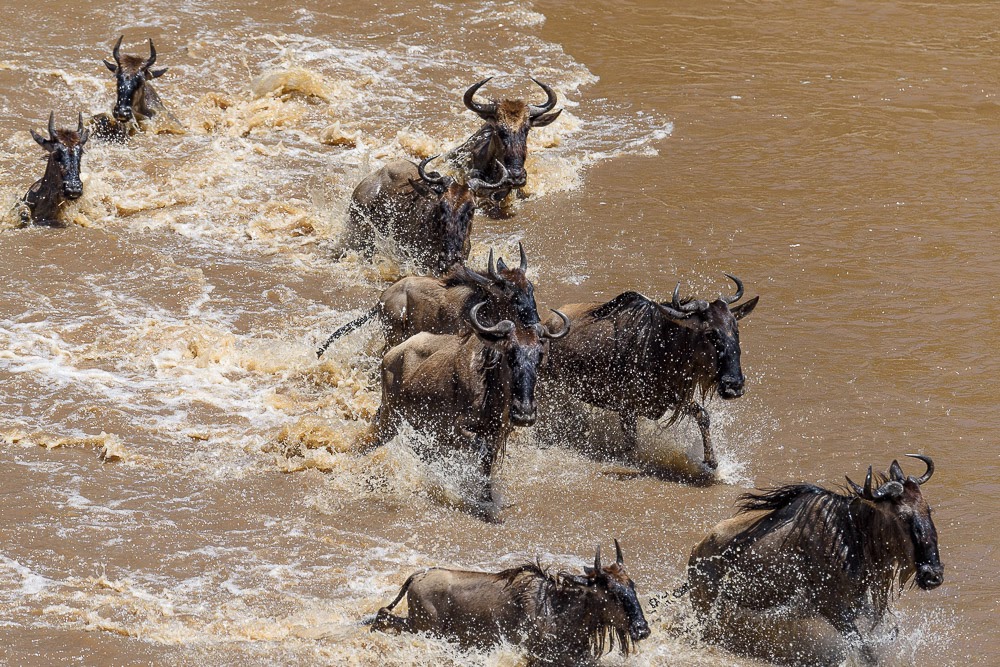
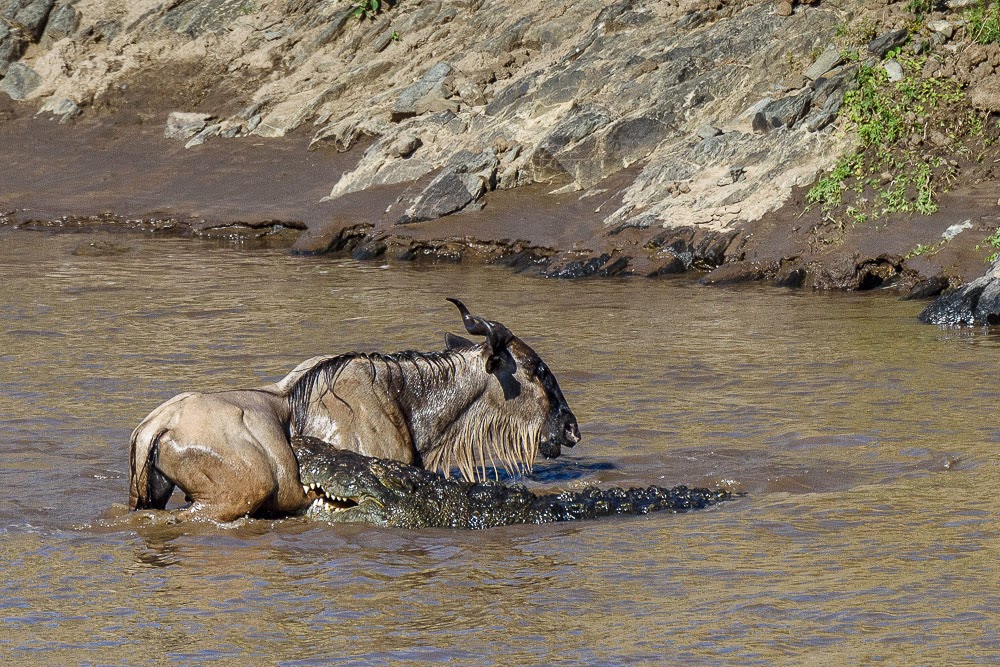
(Masai Mara is part of it) is known for the great migration of zebra and wildebeest. It is at the end of the migration time and so I can only see some smaller river crossings, but they are quite spectacular. Huge Nile crocodiles are waiting in the water, to get their share of this natural phenomena.

http://www.rudolf-hug.ch/content/fotogalerie/Travel/Africa%202014/index.html

http://www.rudolf-hug.ch/content/fotogalerie/Travel/Africa%202014/index.html

What is a safari without the "Big Five"? While elephants and buffalo are relatively easy to photograph, good lion pictures are a bit more difficult. Most of the time they sleep in the shade of a tree. The black rhino and the leopard on the other hand are real challenges and need a lot of patience. Especially the black rhino. Unfortunately there are fewer and fewer animals because of poaching. I had (with a lot of patience) the fortune to get excellent shots of one. Even my guide, the world-renowned photographer "Greg du Toit", said: "This is the best encounter with a free roaming black rhino I've had in my 20-year career."

http://www.rudolf-hug.ch/content/fotogalerie/Travel/Africa%202014/index.html
 
http://www.rudolf-hug.ch/content/fotogalerie/Travel/Africa%202014/index.html

http://www.rudolf-hug.ch/content/fotogalerie/Travel/Africa%202014/index.html

http://www.rudolf-hug.ch/content/fotogalerie/Travel/Africa%202014/index.html

http://www.rudolf-hug.ch/content/fotogalerie/Travel/Africa%202014/index.html

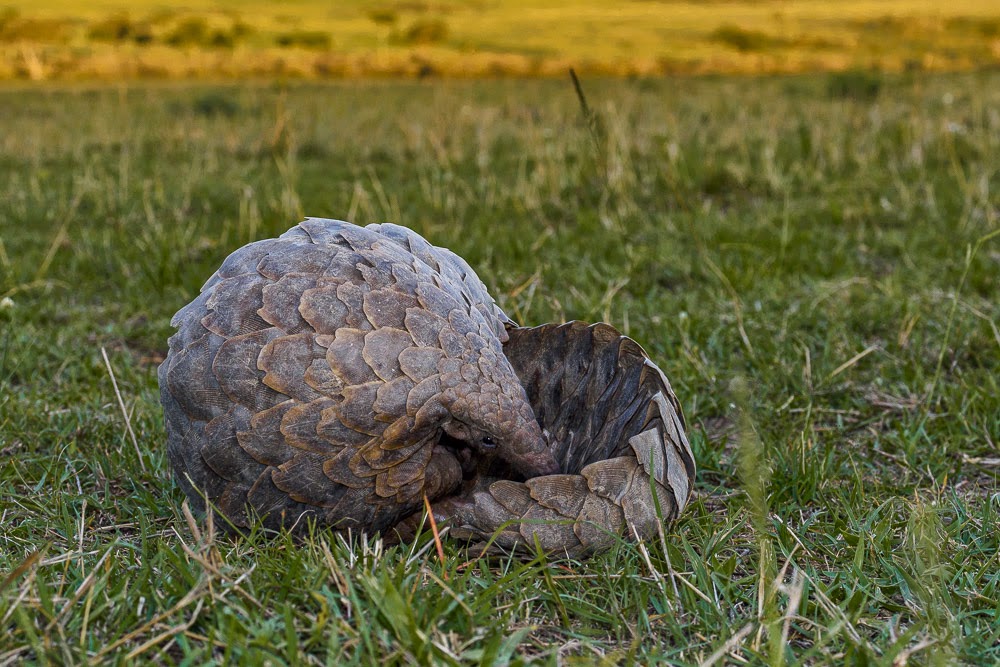
Even if the "Big Five" are on the wish-list of every wildlife photographer, there are a few much rarer animals. At the sight of a Pangolin even the local Masai get extremely excited. After many years in the bush as shepherds or guides not all of them have seen one before. A primeval, endangered mammal with long claws, which curls up into a ball, like a hedgehog, at threat.
A young striped Jackal backlit by the morning sun is also one of the rare events.


http://www.rudolf-hug.ch/content/fotogalerie/Travel/Africa%202014/index.html

http://www.rudolf-hug.ch/content/fotogalerie/Travel/Africa%202014/index.html

http://www.rudolf-hug.ch/content/fotogalerie/Travel/Africa%202014/index.html
 
Just before the rainy season, huge cloud formations build in the late afternoon, which  develop into spectacular sceneries of structures and colors in the light of the setting sun.
The rising full moon and the elephant at the horizon are frozen in a very unique moment of time.

http://www.rudolf-hug.ch/content/fotogalerie/Travel/Africa%202014/index.html 

http://www.rudolf-hug.ch/content/fotogalerie/Travel/Africa%202014/index.html


 Amboseli Nationalpark

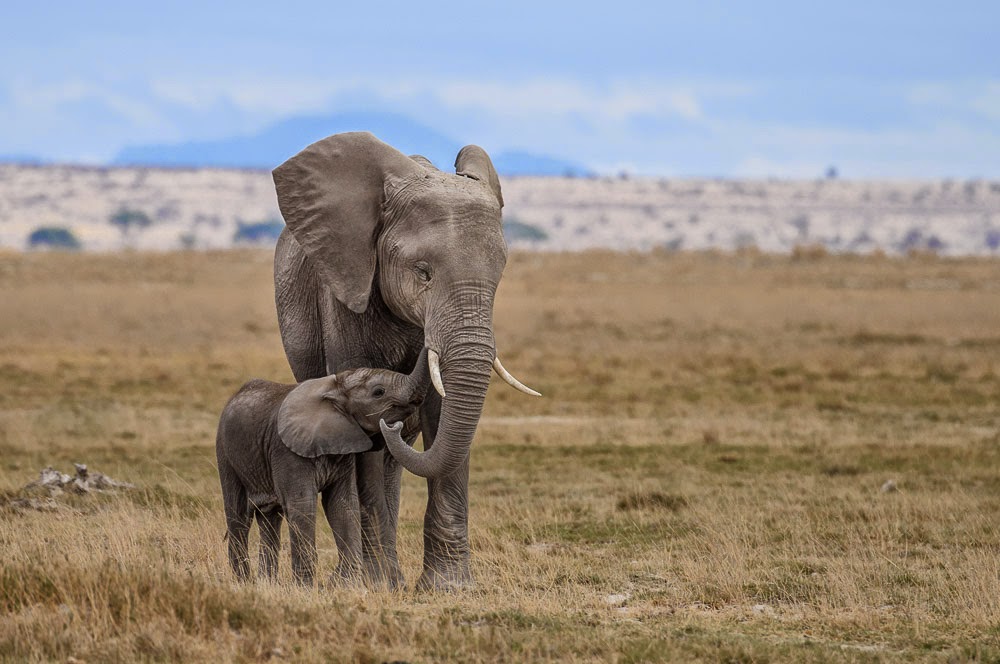
A very different landscape can be seen in the Amboseli National Park, in southwestern Kenya. Dry, sandy desert landscape around a lake that is fed by the Kilimanjaro. The animals walk long distamces, to drink at the water points. The big elephant herds not only fascinate me, but they touch my heart.


 http://www.rudolf-hug.ch/content/fotogalerie/Travel/Africa%202014/index.html

http://www.rudolf-hug.ch/content/fotogalerie/Travel/Africa%202014/index.html

http://www.rudolf-hug.ch/content/fotogalerie/Travel/Africa%202014/index.html

http://www.rudolf-hug.ch/content/fotogalerie/Travel/Africa%202014/index.html

It is not my last trip to Africa. Already booked is a trip next summer to Botswana and South Africa.

More Images under

Thursday, August 21, 2014

Whales in the Alexander Archipelago, Alaska, USA

Wonderful encounters with whales

The spectacular scenery of Alaska, whales and grizzly bears. Three themes that make a trip to Alaska worthwhile. And, for Alaska fantastic weather with plenty of sunshine and only one day of rain. Mosquitoes - just a few and light-conditions, which delight the heart of a photographer.

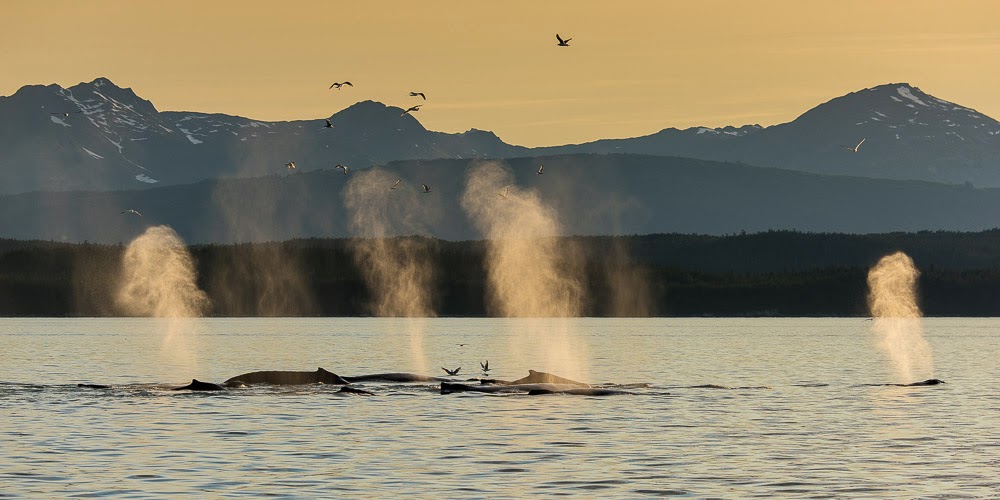
The first part of the trip is a week-long cruise in the Alexander Archipelago, the waters around Juneau in southeast Alaska. The boat is small and cramped for eight guests, but still cozy. The encounters with humpback whales and orcas in the vastness of the sea are spectacular. Sometimes the whales come as close to the boat that one gets wet from the mist of their "blow".

 
http://www.rudolf-hug.ch/content/fotogalerie/Travel/Alaska%202014%20Whale%20watching/index.html

http://www.rudolf-hug.ch/content/fotogalerie/Travel/Alaska%202014%20Whale%20watching/index.html

http://www.rudolf-hug.ch/content/fotogalerie/Travel/Alaska%202014%20Whale%20watching/index.html

In the waters in the archipelago are rich herring schools. The humpback whales use a special technique, "bubble net feeding", to catch them. By cleverly blowing air bubbles at depths of 100 m, they create a bubble net that traps their prey near the surface. Then with the grace of synchronised swimmers, the 35-tonne giants shoot with mouth wide open to the surface to devour their prey.

http://www.rudolf-hug.ch/content/fotogalerie/Travel/Alaska%202014%20Whale%20watching/index.html

http://www.rudolf-hug.ch/content/fotogalerie/Travel/Alaska%202014%20Whale%20watching/index.html
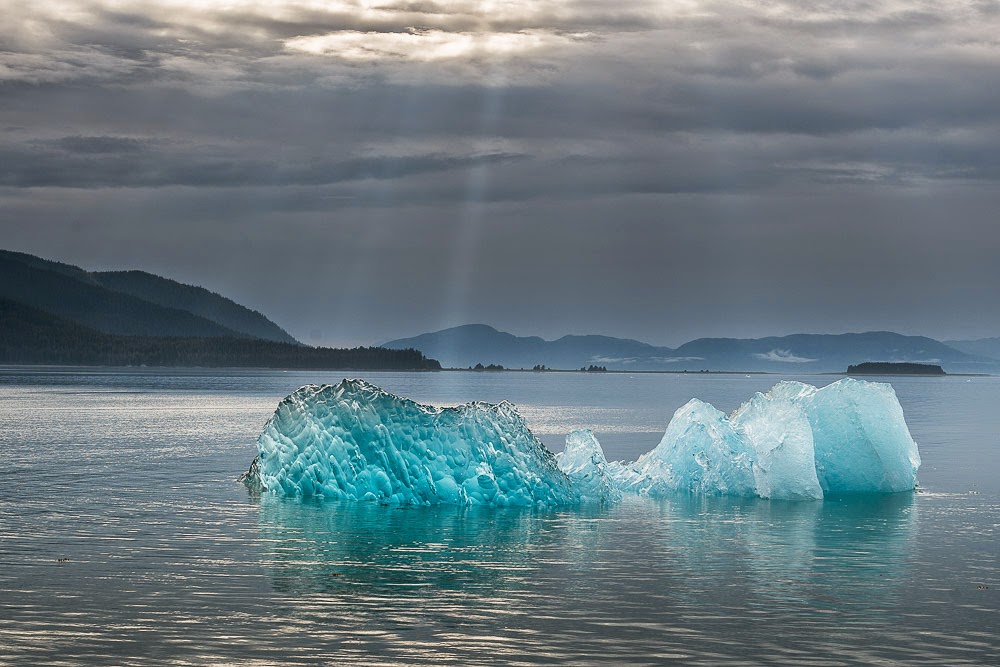
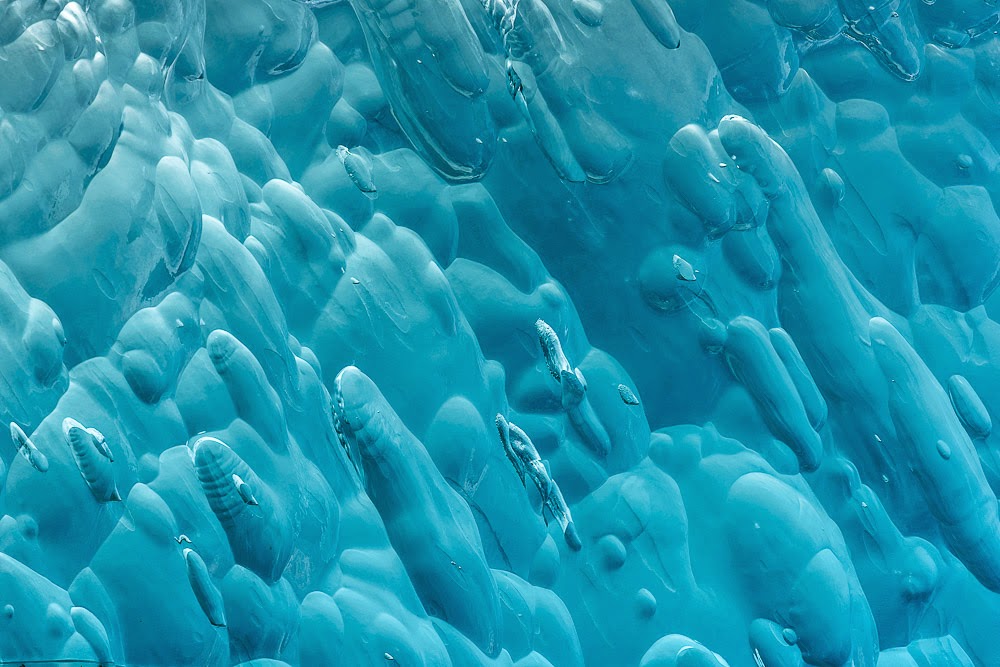
I can experience a special encounter with an "iceberg". Inconspicuously he drifts in the vast of the archipelago. Through the waves of the approaching boat the iceberg gets suddenly unstable and rotates. The light of the sparse rays of sunlight reveals an ice sculpture of incredible beauty. The millennia-old ice sculpture shows an "inner-life", I have never seen before.

http://www.rudolf-hug.ch/content/fotogalerie/Travel/Alaska%202014%20Whale%20watching/index.html

http://www.rudolf-hug.ch/content/fotogalerie/Travel/Alaska%202014%20Whale%20watching/index.html

Especially spectacular are the humpback whales, when they jump. But also difficult to photograph! You never know where they jump - either it happens too far away, or in the back or too close! A second or two and you only see the white spray.

http://www.rudolf-hug.ch/content/fotogalerie/Travel/Alaska%202014%20Whale%20watching/index.html

http://www.rudolf-hug.ch/content/fotogalerie/Travel/Alaska%202014%20Whale%20watching/index.html

The sea is usually calm in the archipelago and in the bays, where we anchor each overnight, it is often as smooth as glass. The setting sun enchants the landscape in a rhapsody of blue and orange.

http://www.rudolf-hug.ch/content/fotogalerie/Travel/Alaska%202014%20Whale%20watching/index.html
  
More images:

Face to Face Grizzlies, Alaska, USA

Coastal bears at Cook Inlet

The spectacular scenery of Alaska, whales and grizzly bears. Three themes that make a trip to Alaska worthwhile. And, for Alaska fantastic weather with plenty of sunshine and only one day of rain. Mosquitoes - just a few and light-conditions, which delight the heart of a photographer.

The second part of the journey leads me to the Lake Clark National Park. On the coast of Cook Inlet,
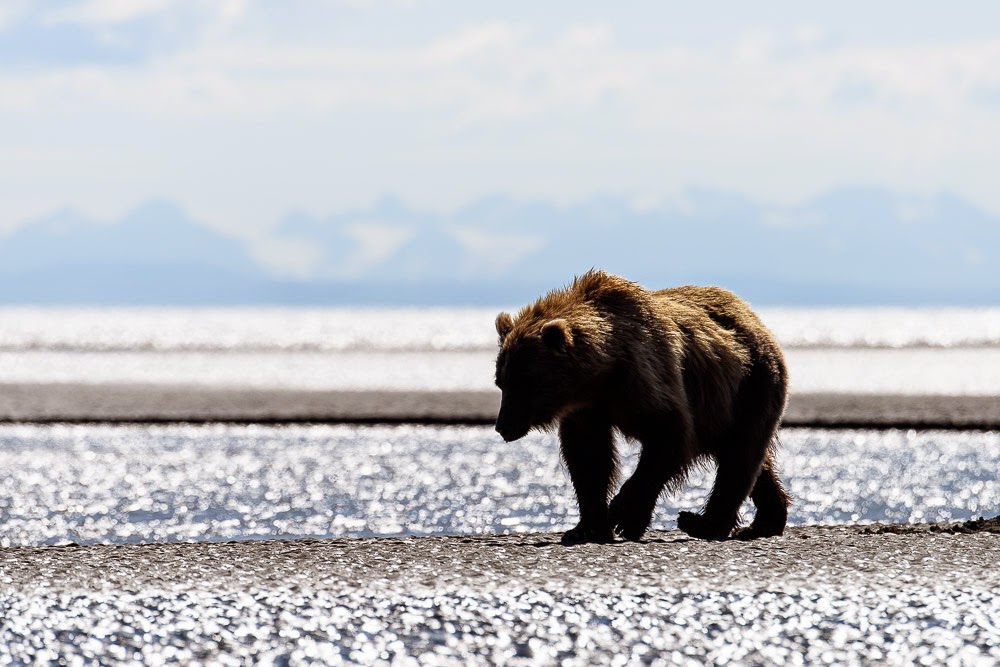
live a number of coastal grizzlies, mostly mothers with their cubs and youngsters. From Anchorage, it is a one hour flight with an over forty year's old Super Otter. The flight is phenomenally quiet and with a virtually cloudless sky, the view is terrific.

http://www.rudolf-hug.ch/content/fotogalerie/Travel/Alaska%202014%20Lake%20Clark/index.html

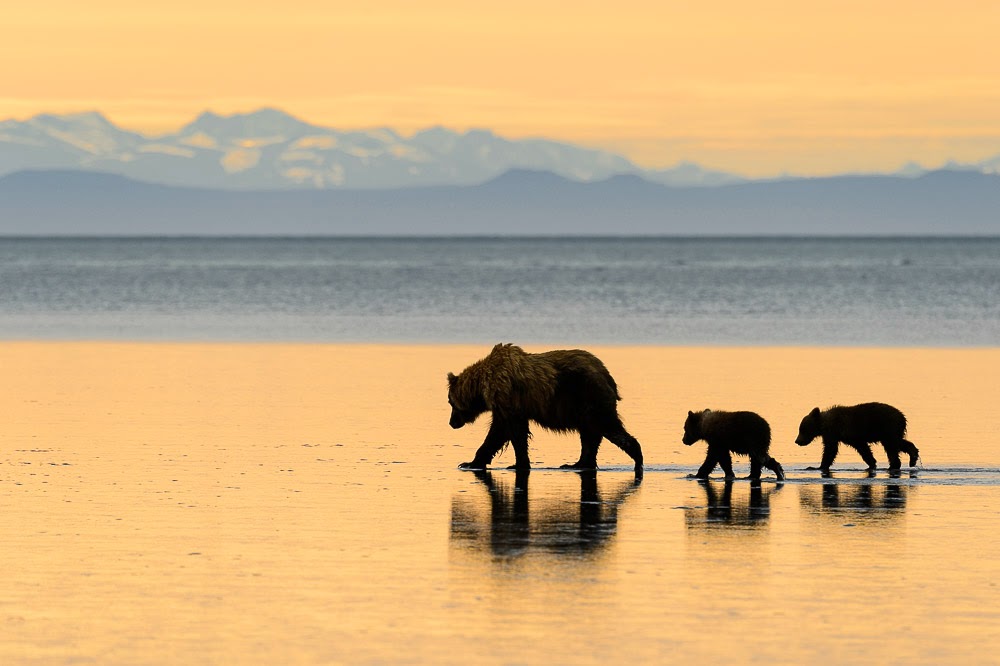
The Coastal Grizzlies feed this time of year mostly in the sedge meadows or use the low tide to dig in shallow sand for clams. The bears find the clams, which are up to eight inches below the surface, with their fine nose.

 http://www.rudolf-hug.ch/content/fotogalerie/Travel/Alaska%202014%20Lake%20Clark/index.html 

 http://www.rudolf-hug.ch/content/fotogalerie/Travel/Alaska%202014%20Lake%20Clark/index.html
The sunrises and sunsets give a fantastic, mystical light. The days are long, as we often start a six in the morning and get back to the lodge after 10 PM. During mid-day however, the light is harsh, so we use this time for a siesta.

http://www.rudolf-hug.ch/content/fotogalerie/Travel/Alaska%202014%20Lake%20Clark/index.html
 
http://www.rudolf-hug.ch/content/fotogalerie/Travel/Alaska%202014%20Lake%20Clark/index.html

Since almost no males are in the area, the mothers move relatively careless with their young. Nevertheless, they are always on guard, because also another female could threaten their offspring. They nurse the young in the immediate vicinity of us, which shows that they are very accustomed to people.

http://www.rudolf-hug.ch/content/fotogalerie/Travel/Alaska%202014%20Lake%20Clark/index.html

http://www.rudolf-hug.ch/content/fotogalerie/Travel/Alaska%202014%20Lake%20Clark/index.html

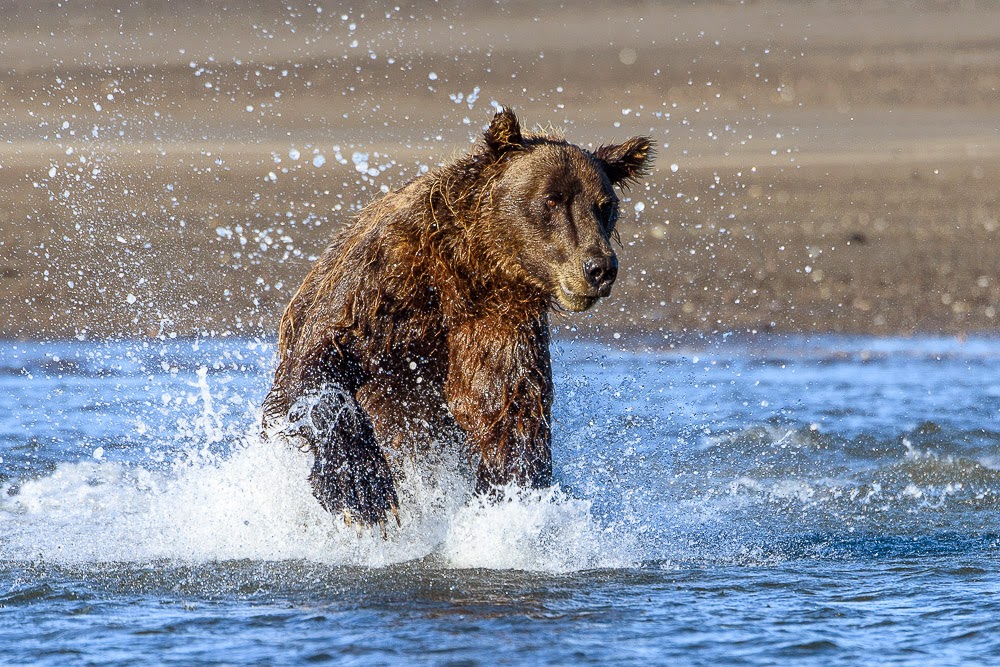
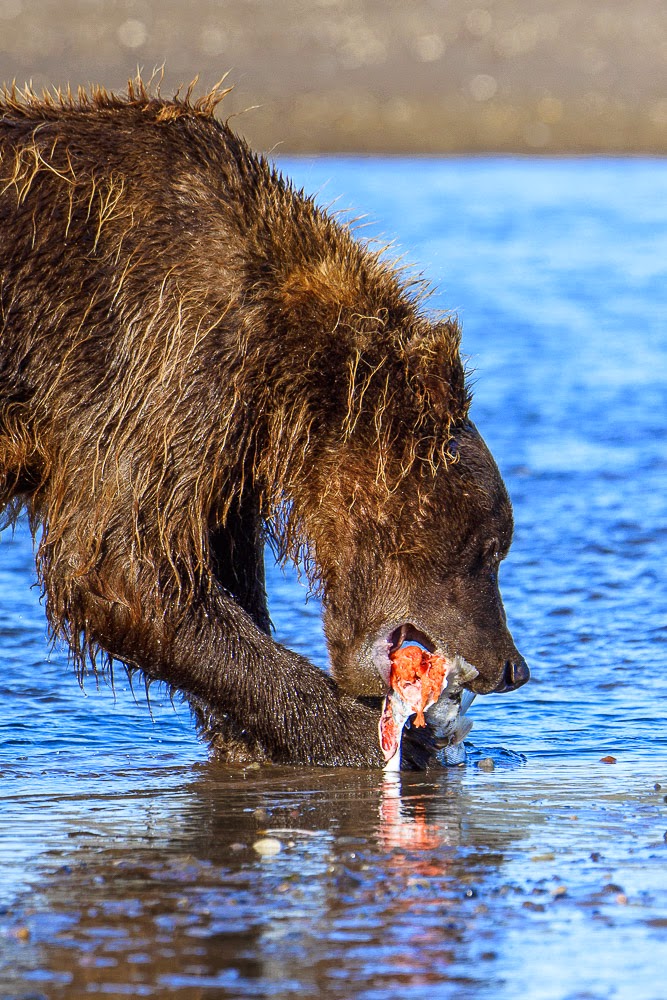
The silver salmon run has just started. Patiently the old female waits for the first salmon. After a few failed attempts she succeeds and eats the first salmon from head to fin.

http://www.rudolf-hug.ch/content/fotogalerie/Travel/Alaska%202014%20Lake%20Clark/index.html

http://www.rudolf-hug.ch/content/fotogalerie/Travel/Alaska%202014%20Lake%20Clark/index.html
 
http://www.rudolf-hug.ch/content/fotogalerie/Travel/Alaska%202014%20Lake%20Clark/index.html

The encounters with the bears are diverse. Be it at the beach, on the meadow, the stream or at dawn on a bear trail. Sometimes from as close of less than 10 meters - but always with the necessary caution and with respect!

http://www.rudolf-hug.ch/content/fotogalerie/Travel/Alaska%202014%20Lake%20Clark/index.html

http://www.rudolf-hug.ch/content/fotogalerie/Travel/Alaska%202014%20Lake%20Clark/index.html
More images:
Read also the blog: